
2JZ-GTE and 2JZ-GE: the engines of the JZA80 Supra
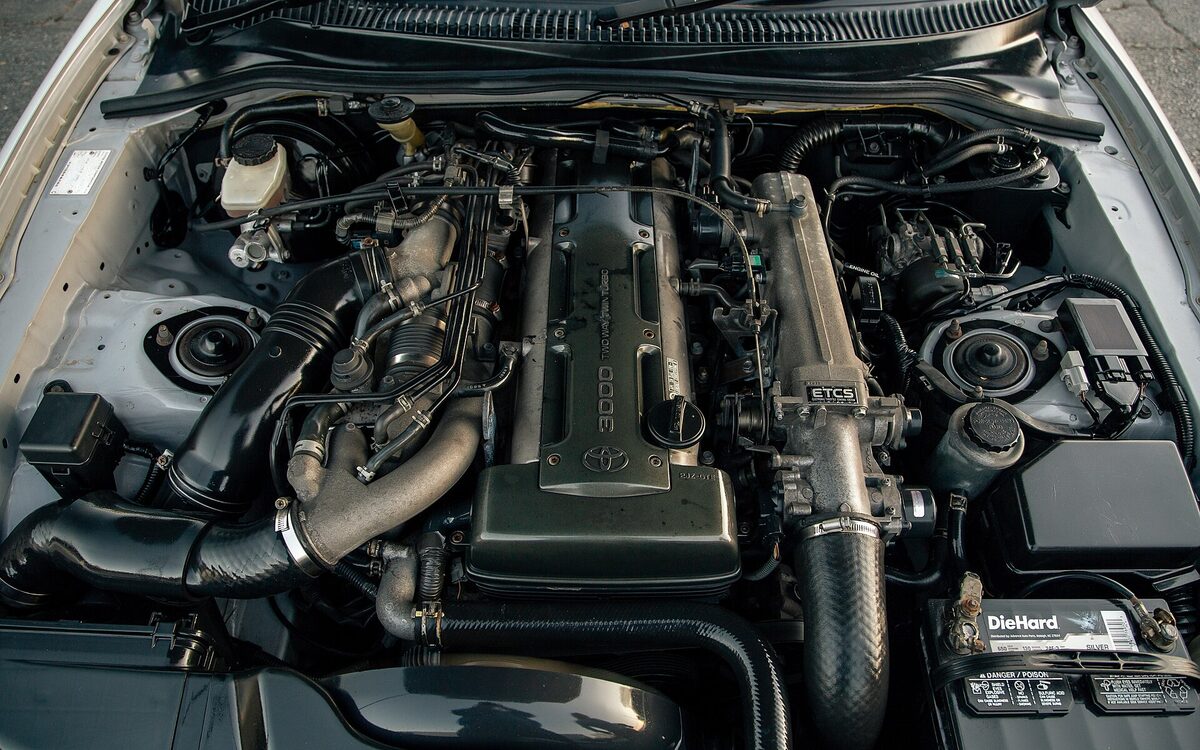
The 2JZ is the 3.0-liter inline-six of Toyota's JZ engine family, built from 1991 to 2007. Every fourth-generation Supra has one: the naturally aspirated 2JZ-GE or the sequential twin-turbo 2JZ-GTE, rated at 280 PS in Japan and 320 hp in the US. Its iron block and strong bottom end made it one of the best-known tuning engines in the world.
- Displacement
- 2,997cc
- 3.0 L inline-six
- Bore × stroke
- 86 × 86mm
- square
- 2JZ-GTE power
- 280PS
- Japan; US 320 hp
- 2JZ-GTE torque
- 431Nm
- 44.0 kgf·m at 3,600 rpm
2JZ-GE and 2JZ-GTE specifications#
| Spec | 2JZ-GE | 2JZ-GTE |
|---|---|---|
| Layout | Inline-six, DOHC, 24 valves, cams driven by a belt; cast-iron block, aluminum head | |
| Displacement | 2,997 cc; bore × stroke 86 × 86 mm | |
| Compression | 10.0:1 | 8.5:1 |
| Induction | Naturally aspirated | Two turbochargers working in sequence, air-to-air intercooler at the side |
| Power, Japan (1994 Supra) | 225 PS (165 kW) at 6,000 rpm | 280 PS (206 kW) at 5,600 rpm |
| Torque, Japan (1994 Supra) | 284 Nm (29.0 kgf·m) at 4,800 rpm | 431 Nm (44.0 kgf·m) at 3,600 rpm |
| Power, US | 220 hp (164 kW) at 5,800 rpm | 320 hp (239 kW) at 5,600 rpm |
| Torque, US | 210 lb-ft (285 Nm) at 4,800 rpm | 315 lb-ft (427 Nm) at 4,000 rpm |
| Turbochargers | None | Japan: CT20 with ceramic turbine wheels; export: CT12B in steel |
| Turbo injectors | 2JZ-GTE: 440 cc/min in Japan, 550 cc/min for export | |
| Supra transmissions | 5-speed W58 manual (Japanese SZ-R from 1996: 6-speed V161), 4-speed A340E automatic | 6-speed V160 or V161 manual, developed with Getrag; 4-speed A340E automatic |
| Built | 1991-2007 | 1991-2005 |
Japanese figures come from the 1994 Japanese catalog; US figures are Toyota's ratings for the US Supra. European turbo cars were rated at 326 hp (243 kW) and 441 Nm. The Japanese turbo's 280 PS reflected the gentlemen's agreement among Japanese automakers at the time, not the limit of the engine.
Power by market
- 2JZ-GTE power
- 276 hp at 5,600 rpm 1994 catalog
- 320 hp at 5,600 rpm Supra Turbo
- 326 hp turbo cars
- 2JZ-GTE torque
- 318 lb-ft at 3,600 rpm
- 315 lb-ft at 4,000 rpm
- 325 lb-ft
- 2JZ-GE power
- 222 hp at 6,000 rpm 1994 catalog
- 220 hp at 5,800 rpm Supra
- No figure in our sources
- 2JZ-GE torque
- 210 lb-ft at 4,800 rpm
- 210 lb-ft at 4,800 rpm
- No figure in our sources
Japan: the 1994 Japanese catalog on this site (PS and kgf·m); US: Toyota's ratings for the US Supra (hp and lb-ft). Europe: the rating of European turbo cars, from the Wikipedia articles listed under Sources. Switch the units to compare like with like.
2JZ-GE vs 2JZ-GTE: what is different#
Both Supra engines share the block, crankshaft and connecting rods. The turbo engine has dished pistons for lower compression, plus oil squirters that cool the pistons from below. Its cylinder head is different too, with its own ports, camshafts and valves.
That's why NA-T conversions, turbocharging a 2JZ-GE, are so popular. Two things owners often get wrong about the 2JZ:
Half trueAny 2JZ-GE has the same block, crankshaft and rods as a 2JZ-GTE.
A Supra 2JZ-GE does, although the GTE adds dished pistons and oil squirters. The later VVT-i 2JZ-GE of the Aristo, Altezza and Mark II uses weaker connecting rods with a different part number.
Half trueThe 2JZ is a 1JZ with a longer stroke.
The two share the bore, the bore spacing and the basic design. The 2JZ also has a taller block to make room for its 14.5 mm longer stroke. See 1JZ-GTE specs for the smaller engine.
How the sequential twin turbos work#
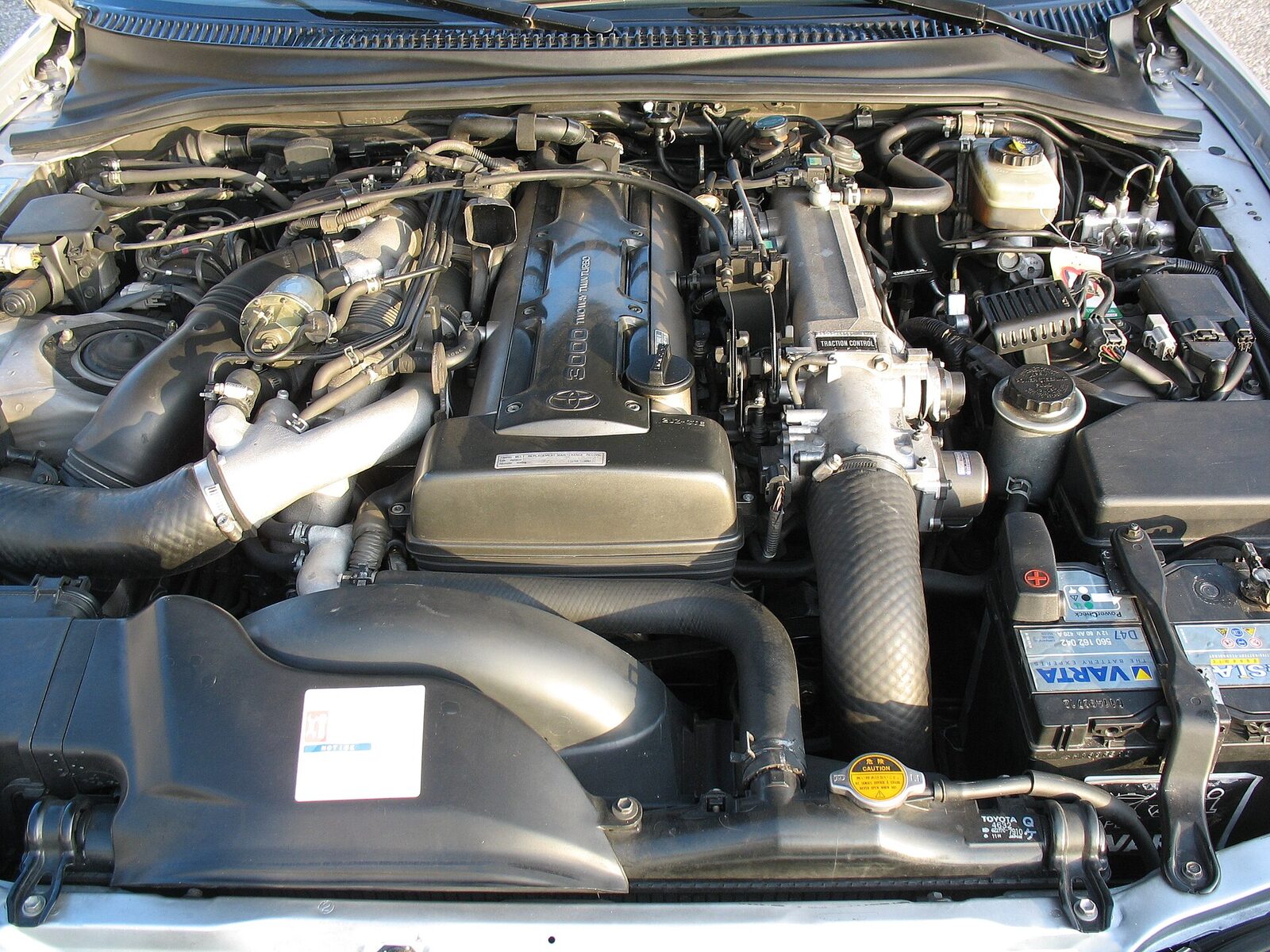
Toyota developed the 2JZ-GTE's two turbochargers with Hitachi. They work in sequence, not in parallel. At low revs all the exhaust gas goes to the first turbo, so the engine pulls hard from under 2,000 rpm.
From about 3,500 rpm some of the exhaust starts spooling the second turbo, and from about 4,000 rpm it feeds air alongside the first. A set of valves and vacuum hoses controls this transition. As they age, the car hesitates around 4,000 rpm, a common complaint with a stock twin-turbo system.
Export engines got steel CT12B turbos, revised camshafts and larger injectors, which explains their extra power over the Japanese engine. The Japanese CT20 came in several versions, marked with B, R and A suffixes.
VVT-i versions#
Variable valve timing (VVT-i) reached the 2JZ-GE in 1995, first in other Toyota models, and the Japanese 2JZ-GTE in 1997. The turbo engine kept 280 PS, but its torque rose to 451 Nm (46.0 kgf·m). In the US the VVT-i 2JZ-GE arrived in Lexus models for 1998; by then the US Supra came only as a Turbo.
The VVT-i 2JZ-GE also dropped the distributor for direct ignition, with one coil for every two cylinders. Japanese-market Supras built from fall 1997 have the VVT-i engines; see the 2001 Supra RZ page.
The 2JZ year by year:
- 1991
Production starts
The 2JZ-GTE goes into the Japanese Toyota Aristo 3.0V (JZS147).
- May 1993
JZA80 Supra
The fourth-generation Supra arrives in Japan with the 2JZ-GE and the 2JZ-GTE.
- Aug 1994
Eight Supra versions
The Japanese catalog lists the SZ, SZ-R, RZ and GZ, two of them with the Aero Top roof.
- 1995
VVT-i 2JZ-GE
Variable valve timing reaches the 2JZ-GE, first in other Toyota models.
- 1997
VVT-i 2JZ-GTE
The Japanese turbo engine gets VVT-i and 451 Nm, and keeps 280 PS.
- 1998
VVT-i in the US
The VVT-i 2JZ-GE arrives in Lexus models; the US Supra is sold only as a Turbo.
- 2005 and 2007
End of production
The 2JZ-GTE is built until 2005, the 2JZ-GE until 2007.
Other cars with the 2JZ#
- 2JZ-GE: Toyota Aristo and Lexus GS 300, Toyota Soarer and Lexus SC 300, Toyota Altezza AS300 and Lexus IS 300, Crown and Crown Majesta, Mark II, Chaser and Cresta, Origin, Progrès, and the Supra.
- 2JZ-GTE: only the Japanese Toyota Aristo (3.0V, JZS147, from 1991; V300, JZS161) and the Supra RZ and Turbo (JZA80).
- 2JZ-FSE: a direct-injection version from about 2000, with an 11.3:1 compression ratio and 220 PS, always with an automatic transmission, in the Brevis, Progrès, Crown and Crown Majesta (S170).
For a swap, a 2JZ-GE often comes out of a Lexus or Toyota sedan; mind the weaker rods of the later VVT-i engines. The Aristo is a common donor for a Japanese twin-turbo engine.
The 1994 JZA80 versions in the Japanese catalog#
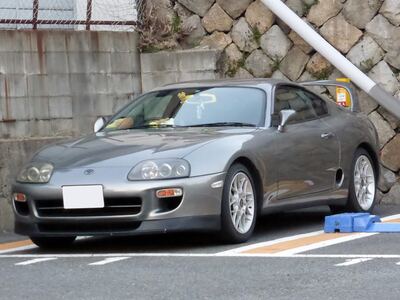
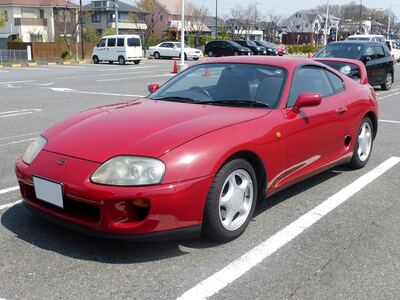
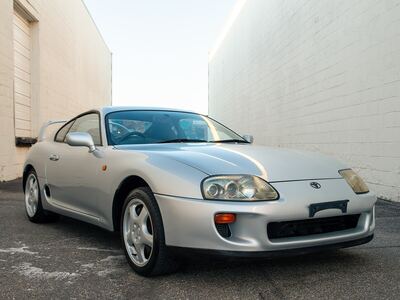
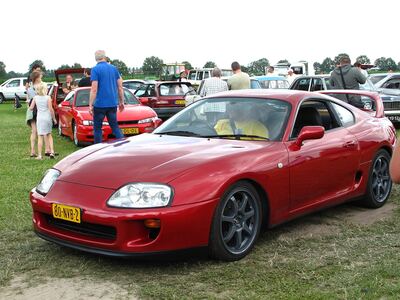
From August 1994 the catalog listed eight Supra versions. The SZ and SZ-R had the 2JZ-GE, the RZ and GZ the 2JZ-GTE, and two cars had the Aero Top targa roof. Click a version for its full specs.
| Version | Body type | Price (kYen) | Drive | Trans | Fuel | Displacement, liters | Engine model | Frame |
|---|---|---|---|---|---|---|---|---|
| SZ | Coupe | 2920 | FR | MT | G | 3.0 | 2JZ-GE | E-JZA80-ALMVF |
| SZ | Coupe | 3020 | FR | AT | G | 3.0 | 2JZ-GE | E-JZA80-ALPVF |
| SZ-R | Coupe | 3150 | FR | MT | G | 3.0 | 2JZ-GE | E-JZA80-ALMSF |
| SZ aero top | Coupe | 3190 | FR | AT | G | 3.0 | 2JZ-GE | E-JZA80-AJPVF |
| RZ | Coupe | 4010 | FR | AT | G | 3.0 | 2JZ-GTE | E-JZA80-ALPQZ |
| RZ | Coupe | 4260 | FR | MT | G | 3.0 | 2JZ-GTE | E-JZA80-ALFQZ |
| GZ | Coupe | 4570 | FR | AT | G | 3.0 | 2JZ-GTE | E-JZA80-ALPZZ |
| GZ aero top | Coupe | 4740 | FR | AT | G | 3.0 | 2JZ-GTE | E-JZA80-AJPZZ |
The codes are explained in terms and abbreviations, and photos of the 1994 catalog are on the catalog photo page. For the whole generation, see Toyota Supra JZA80 (MKIV).


2JZ questions from our forum#
Two projects come up most often: converting a 2JZ-GE car to turbo, and swapping a 2JZ into an older Supra. These are the most-read 2JZ threads:
- 2JZ-GE to 2JZ-GTE swap questions
- Install a 2JZ-GTE, or turbo the 2JZ-GE?
- Difference between the 2JZ-GE and 2JZ-GTE bottom ends
- 2JZ-GE vs GTE
- 7M-GTE to a 1JZ or a 2JZ?
- 7M-GTE vs 1JZ twin turbo vs 2JZ twin turbo
- The difference between a 1JZ and a 2JZ
- A 2JZ with an R154 transmission
- 2JZ-GTE crank torque specs
- 2JZ-GTE crank pulley removal
My 1995 Supra has driven like a dream. I just broke 160k miles last week and can still hang with the big dogs.
Has 400 horsepower with a turbo upgrade.
Rear wheel bearings and engine mounts do not stand up to current horsepower.
Quotes are from owner reviews on this site, as written. Read all reviews or write your own.
If your question isn't answered here, ask it on the MKIV Supra board.
Questions and answers#
How much horsepower does a 2JZ-GTE have?
Official ratings differ by market: 280 PS (206 kW) at 5,600 rpm in Japan, 320 hp (239 kW) in the US Supra Turbo and 326 hp (243 kW) in Europe. The Japanese figure reflected an agreement among Japanese automakers, not the limit of the engine.
What is the difference between the 2JZ-GE and the 2JZ-GTE?
In a Supra they share the block, crankshaft and connecting rods. The GTE has dished pistons for 8.5:1 compression instead of 10.0:1, oil squirters, its own head, camshafts and valves, and two sequential turbos.
What is the difference between the 1JZ and the 2JZ?
They share the bore, the bore spacing and the basic design. The 2JZ has a taller block for 14.5 mm more stroke, which makes it a 3.0-liter engine where the 1JZ is a 2.5.
Can you turbo a 2JZ-GE?
Yes, and these NA-T conversions are popular, because a Supra 2JZ-GE has the same block, crankshaft and connecting rods as the GTE. Engines from other cars need care: the later VVT-i 2JZ-GE of the Aristo, Altezza and Mark II has weaker rods.
When did the 2JZ get VVT-i?
The 2JZ-GE got it in 1995, first in other Toyota models, and the Japanese 2JZ-GTE in 1997. Japanese-market Supras built from fall 1997 have the VVT-i engines.
Article history
- The old list of 1994 catalog versions became a full 2JZ article: specs by market, GE vs GTE, the sequential turbos, VVT-i and other cars with the 2JZ. Also added a quick summary, a power card by market, myth-or-fact cards, a timeline, owner quotes, photos and answers to common questions.
- First published on toyota-supra.info.
Written and kept up to date by Alex Keller. Found a mistake? Write to info@toyota-supra.info.
Sources
- Japanese catalog data on this site: 1994 Toyota Supra versions (power, torque, compression, bore, prices)
- Toyota JZ engine and Toyota Supra articles on Wikipedia (2JZ and fourth generation sections)
- Discussions of toyota-supra.info forum members in the MKIV and MKIII Supra boards
Photos are published under Creative Commons licenses; authors are credited under each photo. Copyright questions: info@toyota-supra.info.