
Toyota Supra A70 (MKIII)
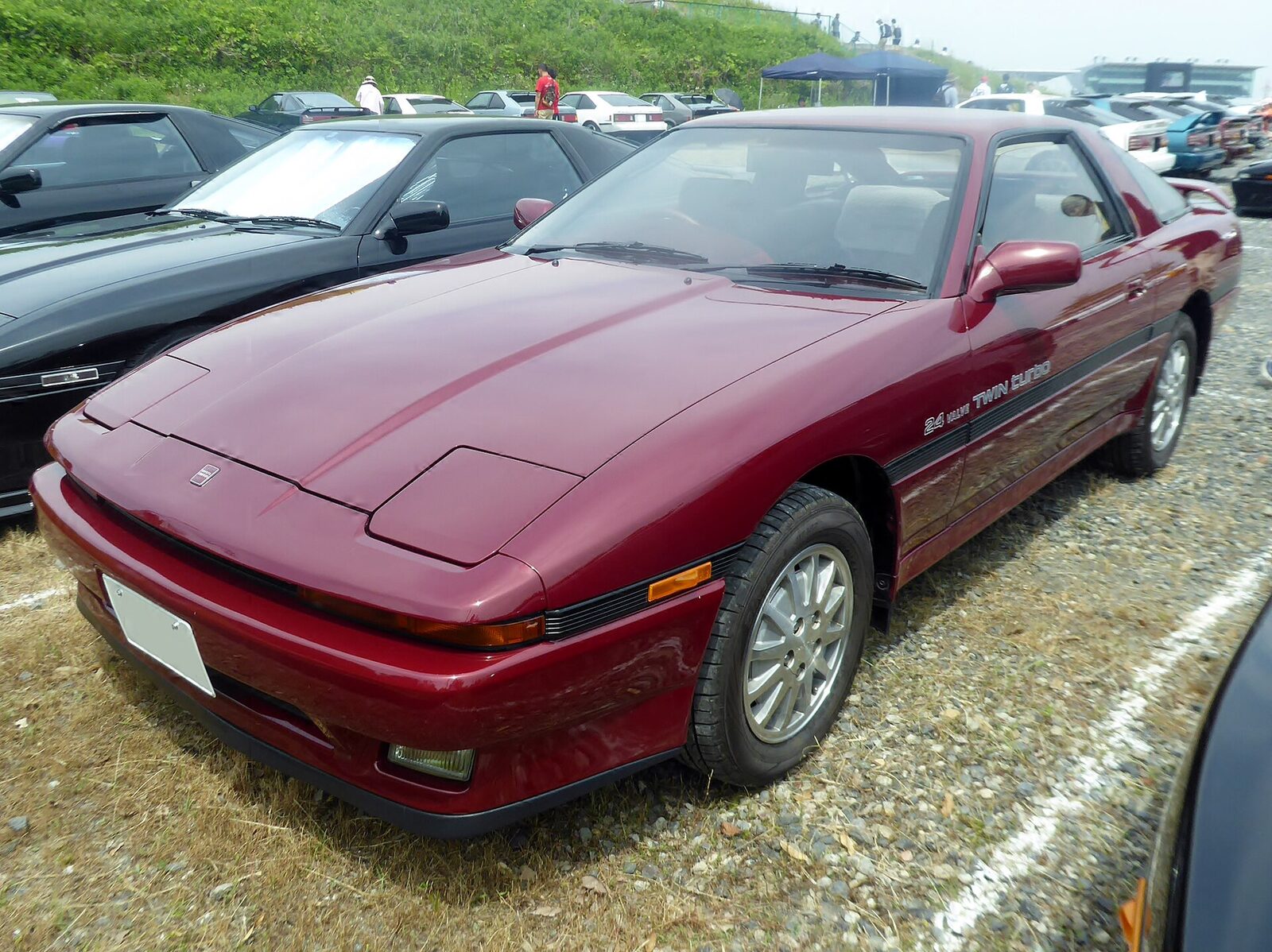
The third-generation Toyota Supra, the A70 or MKIII, was built from February 1986 to 1993. It was the first Supra that was no longer a Celica: the Celica moved to front-wheel drive, while the Supra kept rear-wheel drive and an inline-six, and gained double-wishbone suspension at both ends. Depending on the engine it carries the chassis code MA70 (3.0-litre 7M), GA70 (2.0-litre 1G) or JZA70 (2.5-litre 1JZ).
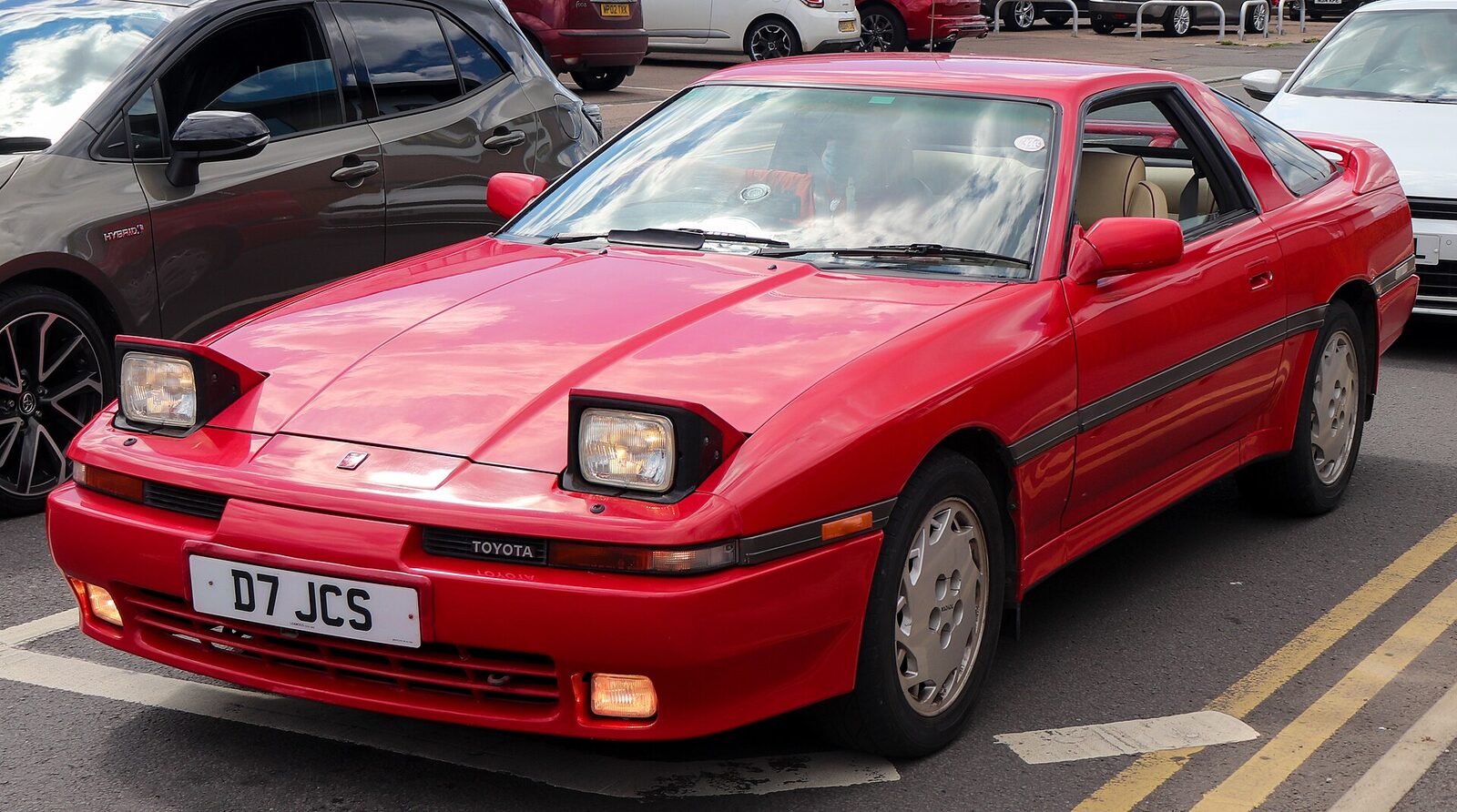

- Production
- 1986–1993
- about 241,471 built
- 7M-GE power
- 200hp
- 149 kW at 6,000 rpm
- 7M-GTE power
- 232hp
- 173 kW, from 1989
- 1JZ-GTE power
- 280PS
- JZA70, Japan
MA70, GA70 and JZA70: the chassis codes
Toyota codes name the engine family first and the car second, so the three A70 codes simply tell you which engine is under the bonnet. Every A70 outside Japan is an MA70; the GA70 and JZA70 were sold new only in Japan, although many have since been imported elsewhere.
| Code | Engines | Sold new in |
|---|---|---|
| MA70 | 3.0-litre 7M-GE and 7M-GTE turbo | USA, Canada, Europe, Australia and Japan (3.0 GT models) |
| GA70 | 2.0-litre 1G-GTE twin turbo, 1G-GEU, and the single-cam 1G-EU of the base models | Japan |
| JZA70 | 2.5-litre 1JZ-GTE twin turbo, from August 1990 | Japan |
The Japanese 2.0-litre cars were built slightly narrower than the 3.0-litre ones, so that they stayed inside the smaller Japanese size class and its lower annual tax. More on the Japanese versions: Supra GA70, Supra JZA70 and Japanese Supras explained.
A70 specifications
| Spec | 7M-GE (non-turbo) | 7M-GTE (turbo) |
|---|---|---|
| Engine | 2,954 cc DOHC 24-valve inline-six | 2,954 cc DOHC 24-valve inline-six, CT26 turbocharger and intercooler |
| Power | 200 hp (149 kW) at 6,000 rpm | 1987–1988: 231 hp (172 kW); from 1989: 232 hp (173 kW) at 5,600 rpm |
| Torque | 250–265 Nm (184–195 lb-ft) at 3,600 rpm | 344 Nm (254 lb-ft) at 3,200 rpm (from 1989) |
| Manual gearbox | 5-speed W58 | 5-speed R154 |
| Automatic | 4-speed A340E | |
| Wheels and tyres | 16 × 7 in alloys, 225/50R16; full-size spare on a steel wheel | |
| Suspension | Double wishbones front and rear; TEMS electronically adjusted dampers on many cars | |
| Body | Three-door liftback, with a removable targa “Sport Roof” panel as an option | |
The A70 was Toyota’s technology flagship of the late 1980s. The 7M-GE used ACIS, a variable intake that tunes the air pulses in the intake to add power. The 7M-GTE was one of the first mass-produced engines without a distributor sold in the USA: three coils sit on the cam covers and fire the cylinders in pairs. Options included anti-lock brakes (three-channel in 1986, four-channel from 1987) and TEMS, with two damper settings chosen by the driver and a third that switched in automatically under hard acceleration, braking or cornering. In Japan the 3.0-litre engines carried a “U” suffix (7M-GEU, 7M-GTEU) because they had a catalytic converter.
Full figures for both engines, with bore, stroke and compression: 7M-GE and 7M-GTE specs.
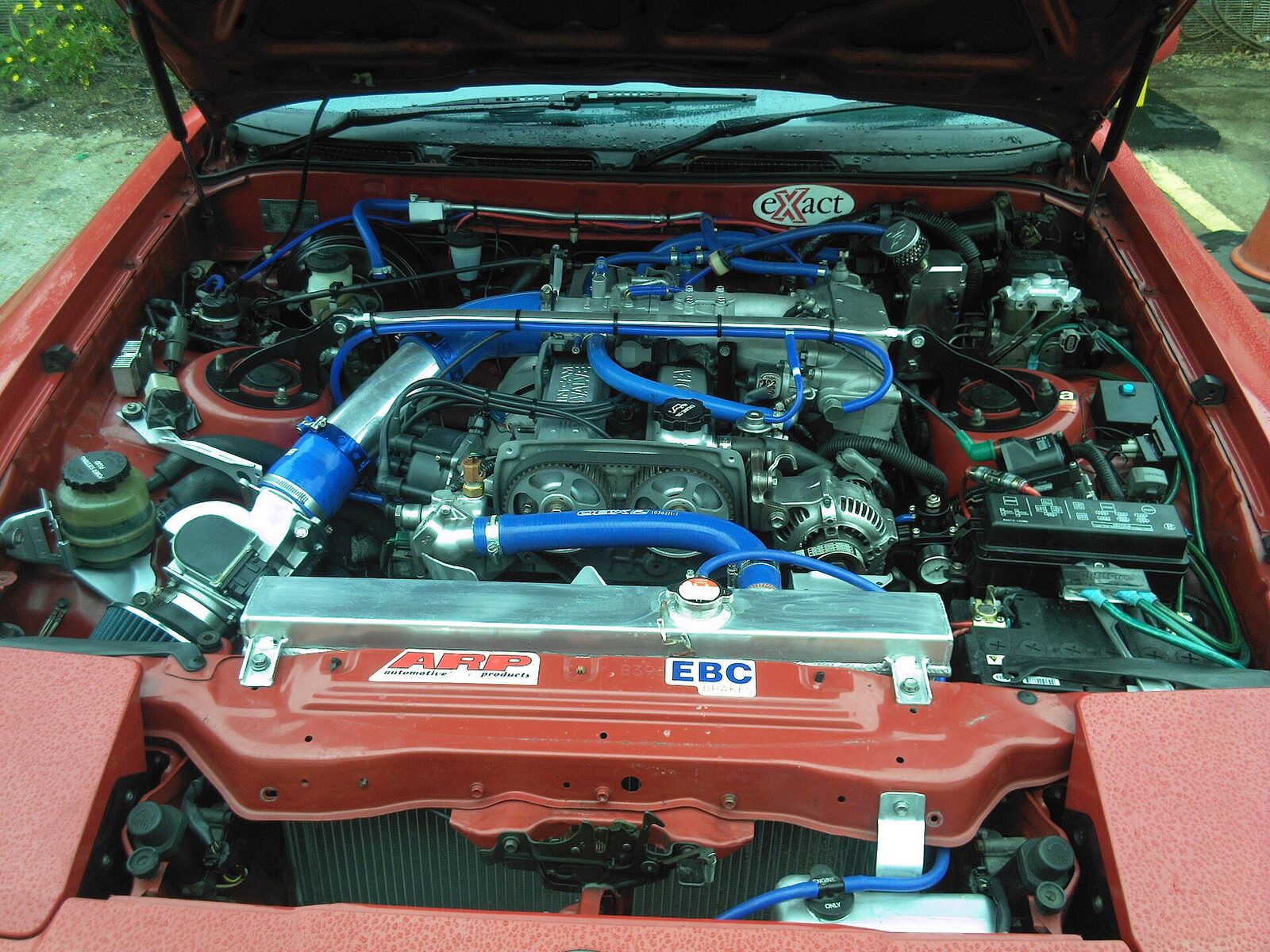

Year-by-year changes
Years below are model years for the US market unless stated otherwise.
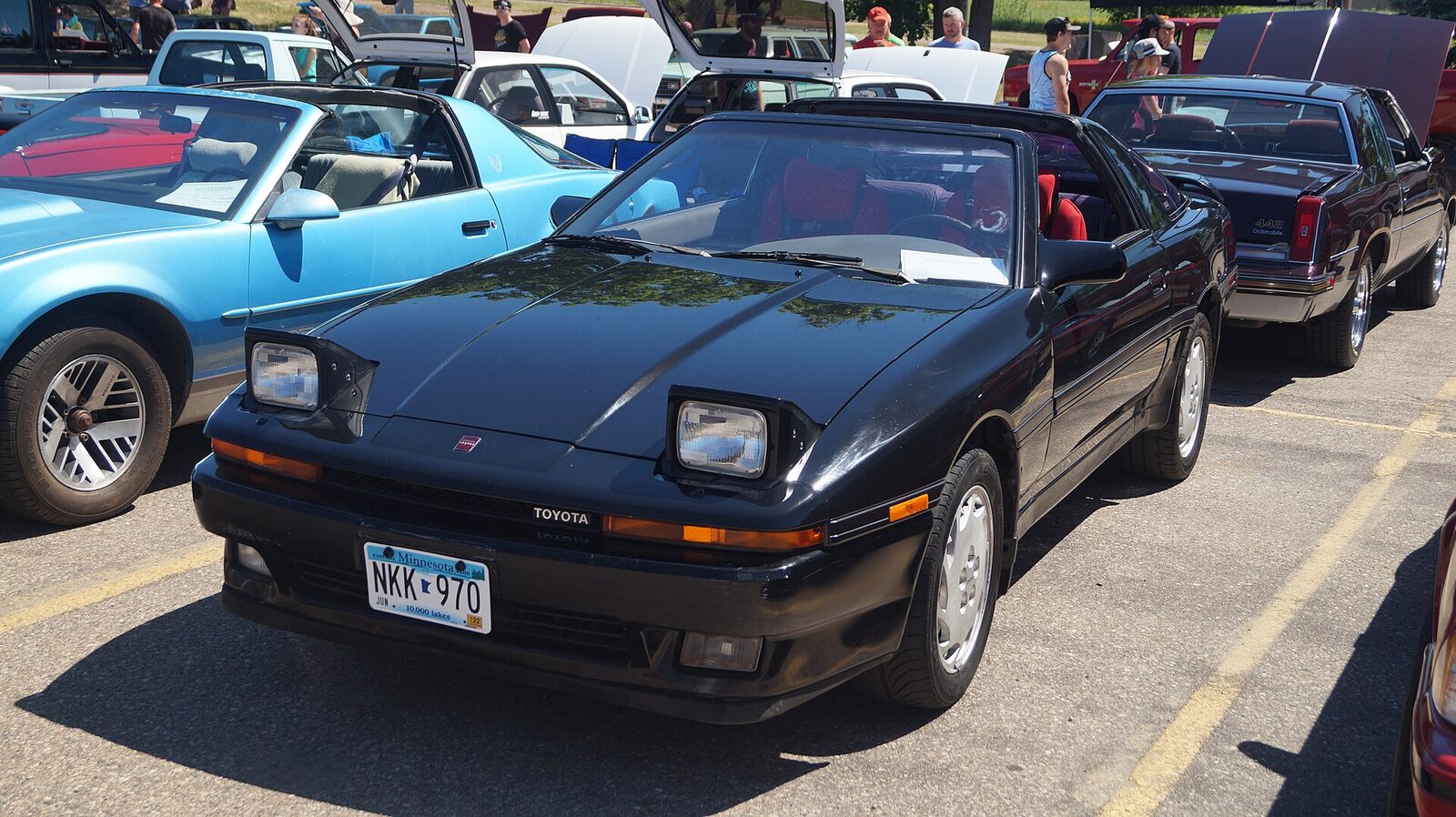
- 1986: the A70 was launched in Japan in February 1986 as a model of its own, and reached the USA in the middle of the year as the 1986.5 Supra, with the non-turbo 7M-GE. TEMS, the targa Sport Roof and three-channel ABS were on the options list.
- 1987: the Supra Turbo arrived with the intercooled 7M-GTE (231 hp), an engine oil cooler and an integrated rear spoiler. Its sports package (limited-slip differential, TEMS and headlamp washers) was optional on the non-turbo car, and four-channel ABS became optional on both. About 1,000 cars were built in a beige and tan colour scheme.
- 1988: small changes: the two-tone brown paint was dropped, the spoiler brake light became trapezoid and the seat pattern changed. In Japan buyers could choose from six versions, from the 3.0 GT Turbo Limited down to the 2.0-litre S. In September and October 1988 Toyota built the 500 Turbo A cars (see below).
- 1989: the facelift: new tail lights, a front bumper with an integrated lower grille, new mirrors, turn signals, fog lights, steering wheel, door panels, climate control and stereo. A revised wastegate gave the turbo 232 hp. The side mouldings lost their steel reinforcement, which ended the rust problem of the earlier cars, and rear three-point seat belts replaced lap belts. It was the last year of headlamp washers and the SuperMonitor trip computer in the USA.
- 1990: a driver’s airbag and a new steering wheel with the cruise control on a stalk (USA), and a heavier, counterbalanced crankshaft with a lower redline.
- 1991: announced in August 1990: five-spoke 16-inch wheels, body-coloured mouldings, the Toyota oval instead of the “Supra” badge on the nose, larger front speakers and a factory panel sunroof. In Japan the JZA70 with the 1JZ-GTE twin turbo arrived with this facelift.
- 1992: black leather seats with the grey interior, an optional subwoofer, and no more targa roof for the non-turbo car. It was the last model year in the USA; production for Japan ended in 1993, when the A80 replaced the A70.
Specifications of individual years and versions: 1988 Supra, all 1989 MA70 catalog versions, 1990 JZA70, 1991 Supra and 1992 Supra Turbo.

Turbo A and the Japanese twin turbos
Turbo A
The Turbo A was the homologation model for Group A touring car racing, which required at least 500 road cars. Toyota built them in September and October 1988, for Japan only. All were black, with black wheels, three ducts in the front bumper, an extra duct to the intercooler, grey leather and a MOMO steering wheel and gear knob. Under the skin the CT26 turbo had a larger compressor inducer (stamped “E”), the throttle body grew from 60 to 65 mm, a MAP sensor replaced the Karman vortex air flow meter, and the brakes and anti-roll bars were upgraded. The MA70 Group A cars won for TOM’S on their Japanese Touring Car Championship debut in 1987, and Fitzgerald Racing won the first Bathurst 12 Hour in March 1991.
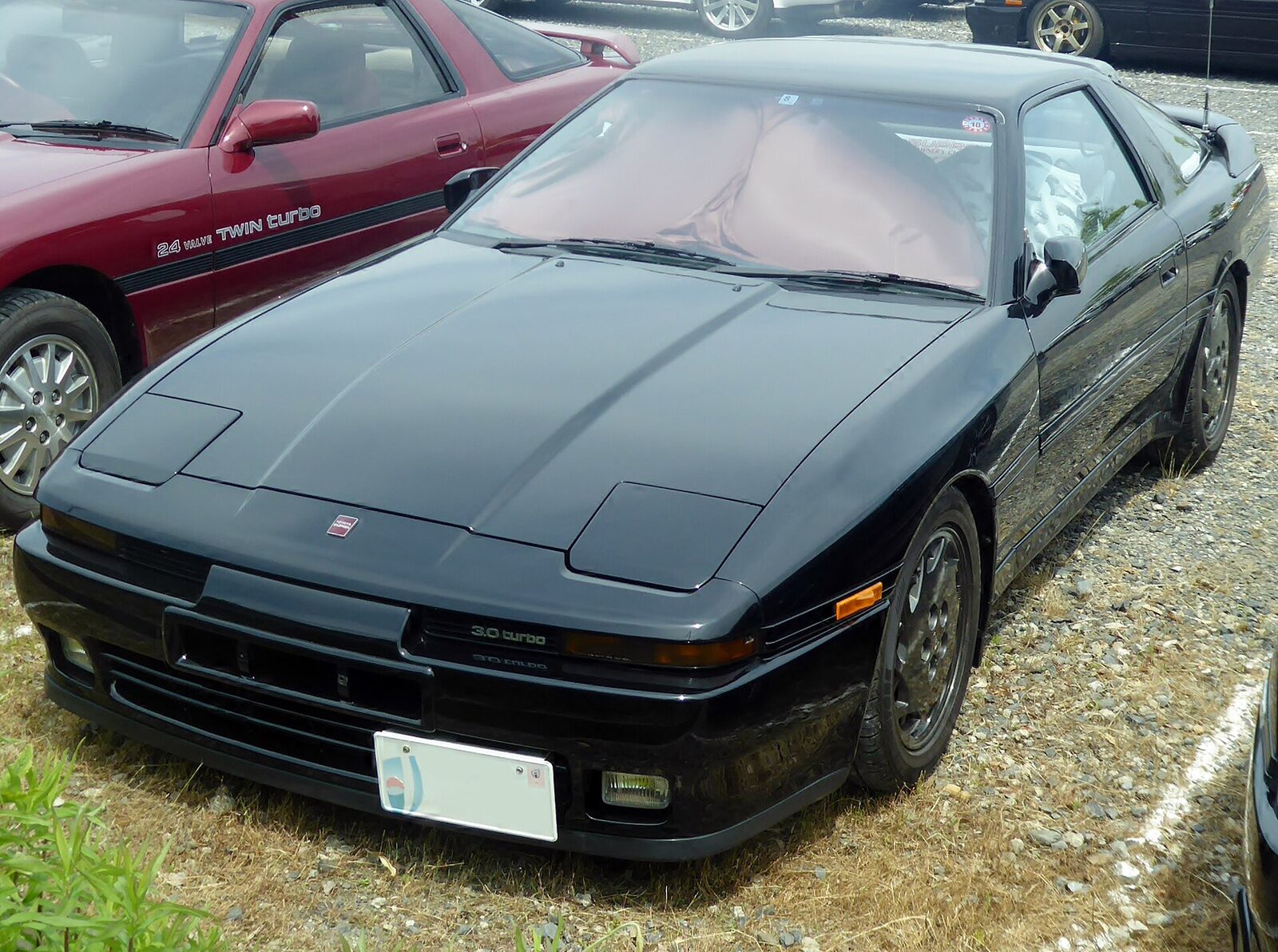

GA70 2.0 GT Twin Turbo
The GA70 used the 2.0-litre 1G-GTE, a twin-turbo version of the small Toyota six, rated at 209 PS (154 kW). It let Japanese buyers have a turbo Supra in the lower tax class. Details: Toyota Supra GA70.
JZA70 2.5 GT Twin Turbo and Twin Turbo R
From August 1990 Japanese buyers could also have the 2.5-litre 1JZ-GTE twin turbo, rated at 280 PS (206 kW). The 2.5 Twin Turbo R added a Torsen differential, Bilstein sports suspension, a larger intercooler, Recaro seats and a MOMO wheel and gear knob; in 1992 it was offered in Jade Mica Green. It is the lightest and fastest A70. The engine itself: 1JZ-GTE specs.

Buying an A70 today
The youngest A70 is now more than thirty years old, so the condition of the individual car matters far more than the year or version. Owners on our forum check these first:
- Head gasket. The best-known weak point of the 7M. Read the blown head gasket symptoms thread before you look at a car, and ask whether the gasket has been replaced and with which head bolts or studs (MA70 bolt specifications).
- Fault codes. The engine computer stores codes that you can read without a scanner: how to check diagnostic codes.
- Vacuum hoses and wiring. Old hoses crack and cause idle and boost problems (vacuum hose diagrams); early and late engine harnesses differ, which matters after an engine swap (yellow and gray plugs).
- Rust and body. Pre-1989 side mouldings had a steel core that rusted; look under them and at the usual places underneath.
- Electronics and options. Check that TEMS, ABS, the pop-up headlights (common problems), the climate control and the digital dash on Japanese cars all work, and that the targa roof does not leak.
- Engine swaps. Many cars now run a 1JZ or 2JZ. A good swap is fine, but ask who did it and how: MKIII 1JZ-GTE swap how-to.
What owners report after years with their cars: owner reviews for 1986, 1987, 1988, 1989, 1991 and 1993. Before a viewing, read checking out an ’86 MK3 tomorrow.
Most-read MKIII threads on our forum
- Steps to modifying your MK3 Supra
- Differences between the 7M-GE and the 7M-GTE
- MK3 Supra body differences
- Blown head gasket repair, with pictures
- 7M-GE engine rebuild
- No heat? The two most common problems
- Automatic to manual conversion
- Tire and wheel fitment Q&A
- Body dimension specifications
- MKIII pictures: the owners’ photo thread
The MKIII FAQ collects the best how-tos; ask your own question on the MKIII Supra board. Factory repair manual: MKIII TSRM online. Photos: MKIII photo album.
Sources
- Toyota Supra article on Wikipedia (third generation section)
- Japanese catalog data on this site: Toyota Supra versions by year
- Discussions of toyota-supra.info forum members in the MKIII Supra board and the MKIII FAQ
Photos are published under Creative Commons licenses; authors are credited under each photo. Copyright questions: info@toyota-supra.info.