
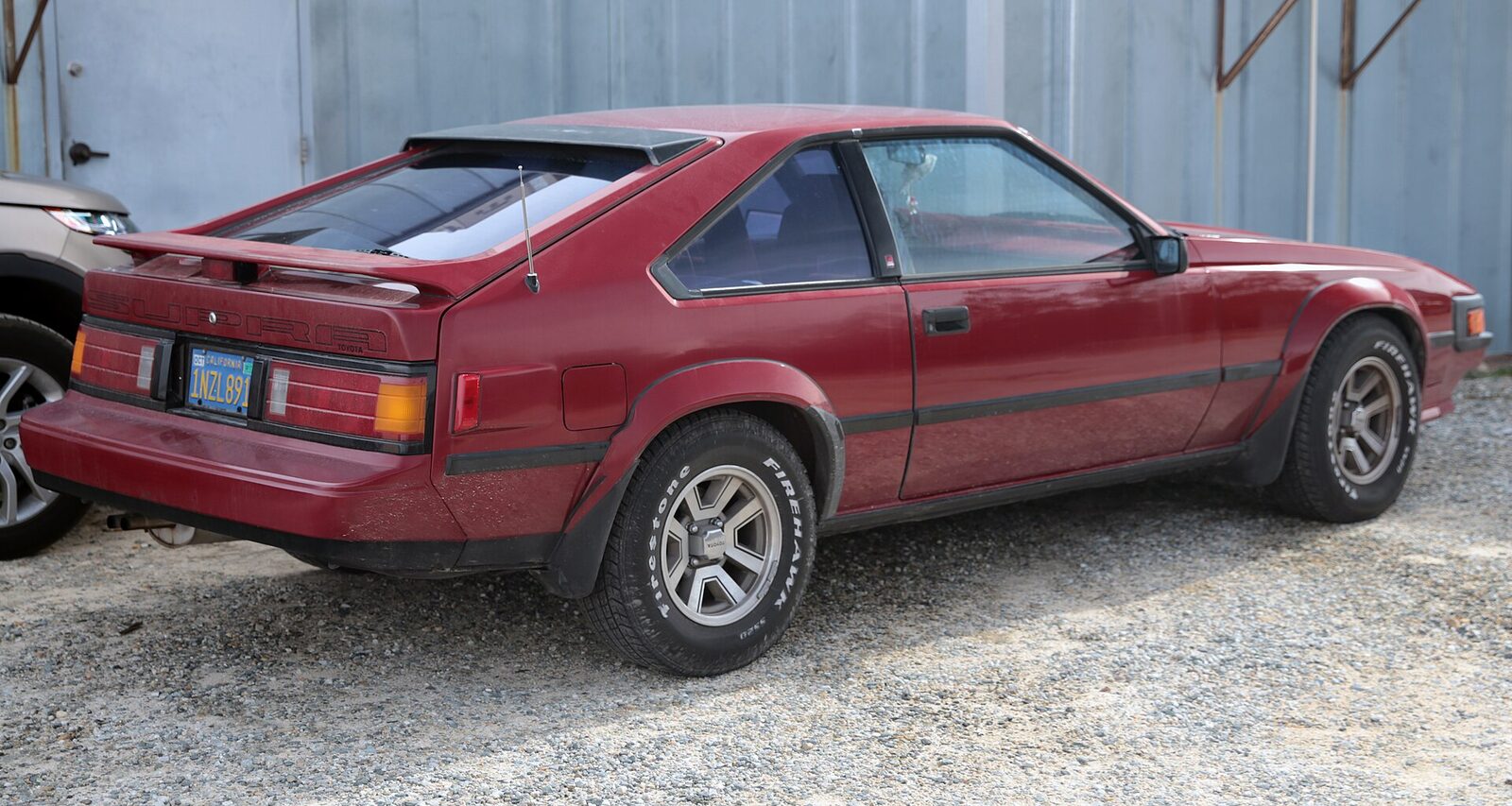
Toyota Celica Supra A60 (MKII)
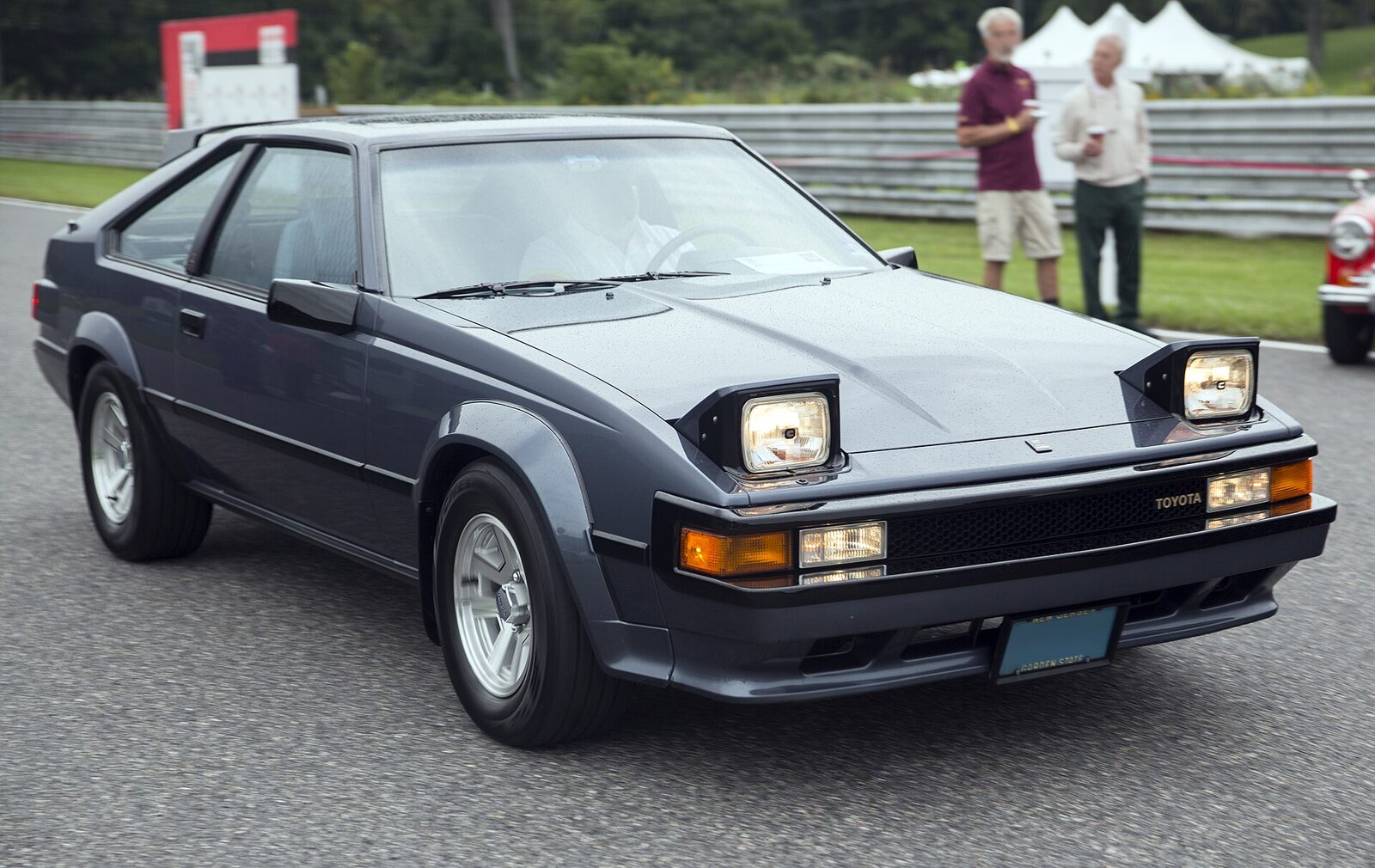
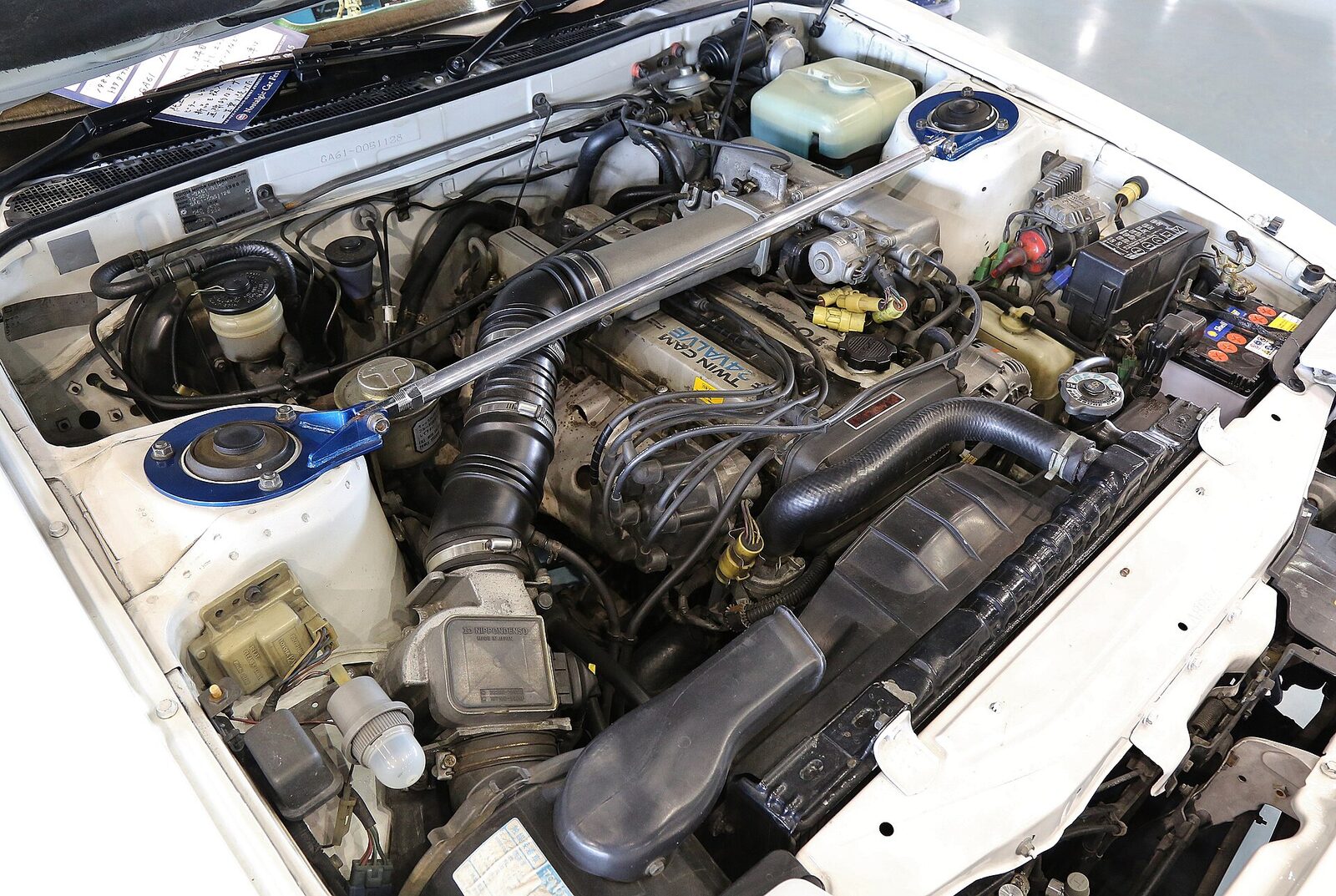
The second-generation Supra, the A60 or MKII, was sold from mid-1981 to 1986, still as a Celica: Celica Supra in export markets and Celica XX in Japan. It brought the pop-up headlights, a 2.8-litre twin-cam 5M-GE inline-six and independent rear suspension tuned with help from Lotus, and won Motor Trend’s Import Car of the Year in the USA.

- On sale
- 1981–1986
- built until December 1985
- Engine
- 2,759cc
- 5M-GE twin-cam six
- US power
- 145–161hp
- 1982 to 1985–86
- 0–60 mph
- 8.4s
- 1985 model
A new Celica Supra
For the 1982 model year Toyota redesigned the whole Celica range, and the Supra with it. The Supra was still built on the Celica platform, but it had its own front end with fully retractable headlights, a longer nose and wheelbase for the inline-six, and its own suspension: MacPherson struts at the front and semi-trailing arms with coil springs at the rear. Steering was power rack-and-pinion, and all Supras had four-wheel disc brakes. Like all Supras of the first three generations, the A60 was assembled at the Tahara plant in Aichi.
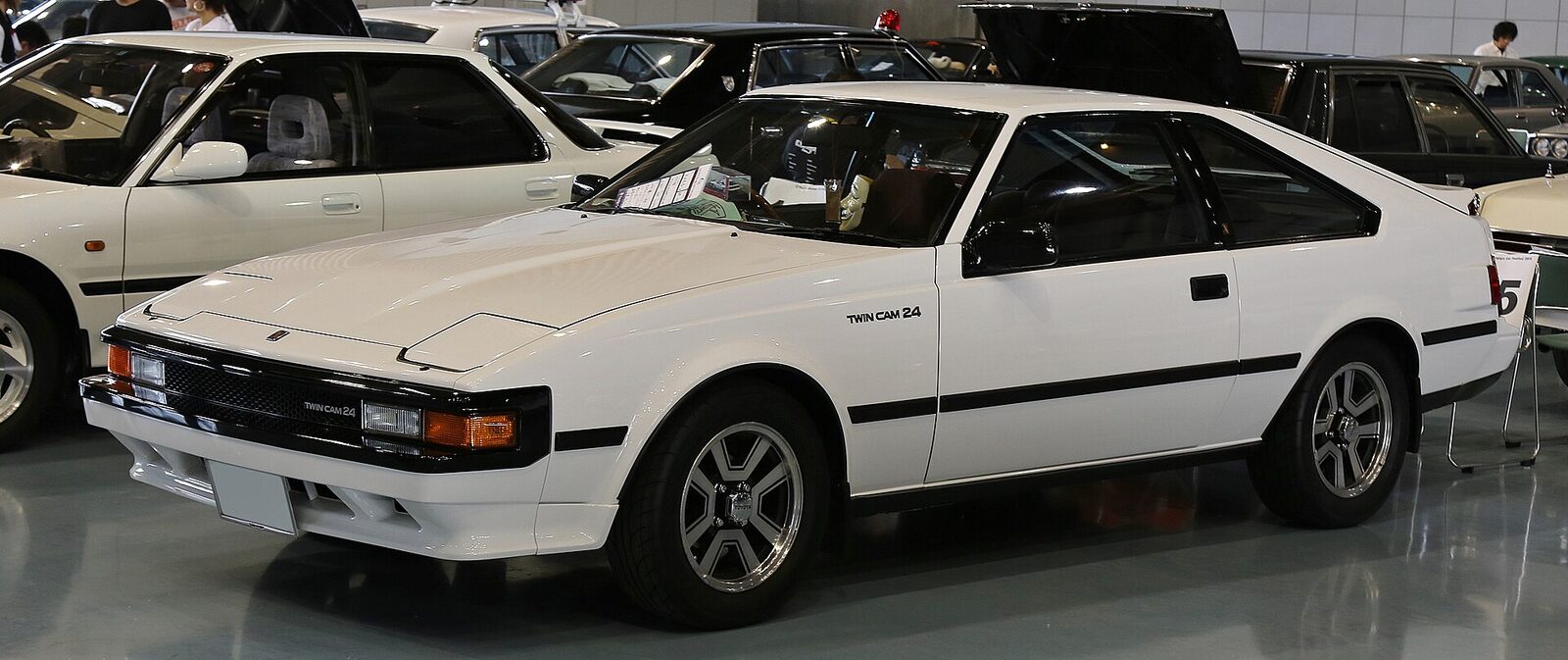
In Japan the car kept the Celica XX name and was offered with smaller engines; Japanese 2.0-litre cars stayed under 1,700 mm wide to fit the lower tax class, while 2.8-litre cars were slightly wider. The Celica XX was also the first car in the world with a navigation computer.
P-type and L-type
In North America the Celica Supra came in two versions that were mechanically identical but equipped differently:
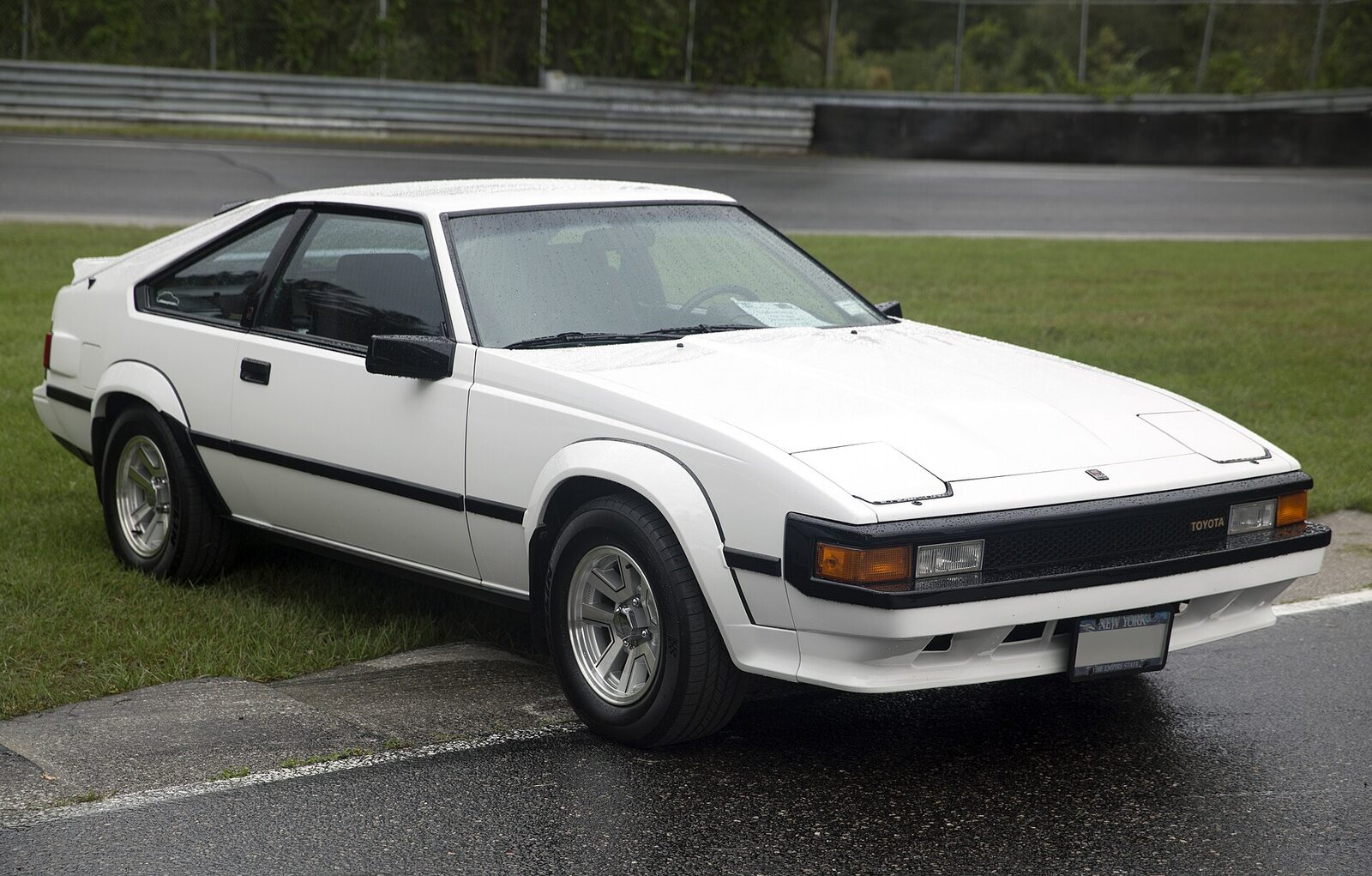
- P-type (Performance type): fibreglass fender flares, 14 × 7 in alloy wheels, eight-way adjustable sports seats and a limited-slip differential as standard; at first manual only. Leather became available in 1983, and headlamp washers were optional from 1983.
- L-type (Luxury type): no fender flares, 14 × 5.5 in wheels (15 × 6 in from 1985), leather as an option and, at first, the automatic gearbox. It could have a digital instrument cluster with a trip computer, recognisable by the “ECT” on the dial plate.
For 1986 only the P-type was offered.

A60 specifications by year (USA)
| Model year | 5M-GE power | Torque | Main changes |
|---|---|---|---|
| 1982 | 145 hp (108 kW) | 155 lb-ft (210 Nm) | Launch; compression 8.8:1, vacuum-advance distributor; 3.72:1 rear axle |
| 1983 | 150 hp (112 kW) | 159 lb-ft (216 Nm) | Electronic ignition advance; ECT electronically controlled automatic (A43DE); P-type 4.10:1, L-type 3.73:1 axle |
| 1984 | 160 hp (119 kW), manual | 163 lb-ft (221 Nm) | New intake manifold, compression 9.2:1, 4.30:1 axle on manuals; wraparound turn signals, new tail lights, body-coloured hatch and bumper |
| 1985–1986 | 161 hp (120 kW) | 169 lb-ft (229 Nm) | Same power for manual and automatic; knock sensor, new EGR system, two-piece rear spoiler |
Manual cars used the five-speed W58, automatics a four-speed A43DL, replaced in 1983 by the A43DE, the first electronically controlled automatic in the industry, with “power” and “normal” modes. The 1982 car had a drag coefficient of 0.348 and reached 60 mph in 9.8 seconds; the 1985 model did it in 8.4 seconds, with a 16.1-second quarter mile. The A60 made Car and Driver’s Ten Best list for 1983 and 1984. More on the engine: 5M-GE specs.
Versions by market
| Market | Engine | Power |
|---|---|---|
| Japan, Celica XX 2800GT | 2.8 L DOHC 5M-GEU | 160 PS; 175 PS from August 1983 |
| Japan, Celica XX 2000GT | 2.0 L DOHC 24-valve 1G-GEU | 160 PS |
| Japan, Celica XX 2000 Turbo | 2.0 L SOHC turbo M-TEU | 145 PS; 160 PS with an intercooler from August 1983 |
| Japan, Celica XX 2000 | 2.0 L SOHC 1G-EU | 125 PS |
| Most of Europe | 2.8 L 5M-GE | 177 PS (1982–83), 170 PS (1984–86) |
| Great Britain | 2.8 L 5M-GE | 178 hp |
| Australia, Sweden, Switzerland | 2.8 L SOHC 5M-E | 140 PS |
Australia, Sweden and Switzerland got the single-cam 5M-E because certifying the twin-cam for their emission rules was not worth the cost. Japanese cars had fender mirrors until August 1983 and door mirrors after it.


Buying an A60 today
Good MKIIs are now classics, and most of what owners ask about on our forum comes down to age:
- Pop-up headlights. Motors, relays and linkages wear; check that both lights rise and fall together (headlights won’t rise, pop-up headlight problems and fixes).
- Ignition and fuel. No-start and no-spark faults are common on old cars (no spark); a car that runs well on a cold start is a good sign.
- Differential and clutch. Ratios changed almost every year (see the table above), so check what is fitted (1985 Supra differential); the clutch master cylinder is a known wear part (replacing it).
- Engine swaps. Many MKIIs now carry a 7M, a 1UZ V8 or another engine. Ask for details and look at the quality of the work (5M to 7M-GTE swap, 1UZ-FE in a MKII).
- Trim. P-type parts (flares, sport seats, alloy wheels) are harder to find than mechanical parts; check that they are present and complete.
Owners’ experience: reviews of the 1982, 1983, 1985 and 1986 Supra, and the forum thread 1985 Supra buying advice.

Most-read MKII threads on our forum
- 5M-GE engine mods
- What’s the difference between a Celica Supra and a Supra?
- JDM 6M-GE engines
- Engine swap: 5M-GE for a 7M-GE
- 1984 Supra wheels
- How to turbo a 5M-GE
- Changing the oil pan gasket
- Help identify a MKII Supra
Ask your own question on the MKII Supra board. Photos: MKII photo album.
Sources
- Toyota Supra article on Wikipedia (second generation section, with the Car and Driver and Motor Trend data quoted there)
- Discussions of toyota-supra.info forum members in the MKII Supra board
Photos are published under Creative Commons licenses; authors are credited under each photo. Copyright questions: info@toyota-supra.info.